Newtec Power Equipment Co., Ltd.
English


Views: 0 Author: Site Editor Publish Time: 2026-08-03 Origin: Site
Sizing a generator accurately matters immensely for your emergency preparedness strategy. Relying on rough, back-of-the-napkin estimates often leads to costly capital mistakes or critical failures during severe power outages. You need precise, evidence-based math to protect your facility and maintain operational continuity. Undersizing triggers stalled motors, unexpected brownouts, and tripped breakers exactly when you need reliable power the most. Conversely, oversizing wastes valuable fuel, forces engines to run inefficiently, and inflates upfront capital expenses unnecessarily. The stakes are simply too high to guess your capacity needs. This guide provides a clear, actionable framework for calculating your true load requirements accurately. We will show you how to interpret complex technical sheets, evaluate environmental variables, and apply essential industry standards. Ultimately, you will learn everything necessary to finalize your procurement decision confidently.
Facility managers often underestimate the complexity of electrical loads. Guessing your power requirements creates two distinct categories of risk. You either face catastrophic operational failures or you suffer from unnecessary financial waste.
Undersizing poses an immediate threat to your infrastructure. High-inrush loads pull massive amounts of current during startup. When a generator lacks sufficient capacity to handle this sudden surge, it causes severe voltage dips. Industry professionals refer to these events as brownouts. These sudden drops in voltage permanently damage sensitive electronics, IT servers, and medical equipment.
Furthermore, insufficient power damages the heavy machinery itself. Motor windings overheat rapidly when they do not receive adequate startup current. Breakers trip unexpectedly, leaving your facility entirely in the dark. What to watch out for: Listen for laboring engine sounds from your backup unit. This indicates the alternator is struggling against a load it cannot physically support.
Many buyers fall for the myth claiming bigger is always better. Oversizing traps you in a cycle of financial waste. First, you face an excessive initial capital expenditure (CapEx). You pay heavily for capacity you will never actually use.
Second, oversized units run incredibly inefficiently. Combustion engines require a minimum load to reach optimal operating temperatures. Underloaded engines fail to seal their piston rings properly. This leads to poor fuel combustion, carbon buildup, and accelerated engine wear. You burn more fuel than necessary while actively damaging internal components.
Electrical compliance removes the guesswork from sizing. Local electrical codes mandate strict safety thresholds. In the United States, the National Electrical Code (NEC) dictates sizing requirements based on your facility's panel and intended load. Inspectors will fail installations failing to meet these rigid standards. You must align your calculations with local regulations to ensure legal and physical safety.
You need a systematic approach to determine your exact capacity requirements. Follow this structured process to build an accurate load profile.
Begin by dividing your electrical equipment into distinct categories. Separate critical survival loads from mere convenience loads. Survival loads include HVAC systems, refrigeration, security panels, and IT servers. Convenience loads encompass secondary lighting, breakroom appliances, and decorative outdoor fixtures.
Next, differentiate between load types. Resistive loads convert current into heat or light directly. Examples include incandescent lighting and space heaters. They feature a 1:1 ratio between starting and running watts. Inductive loads utilize electric motors. Examples include well pumps, air compressors, and elevators. These reactive loads require two to three times their normal running wattage merely to start.
List the continuous running wattage for every essential item on your inventory. Add these numbers together to find your baseline requirement. Now, identify your single largest inductive load. Typically, this is a central air conditioning compressor or an industrial motor.
Find the specific starting wattage for this single heaviest item. Add this surge value to your previous running total. Do not add the starting watts of every single appliance together. Realistically, equipment rarely cycles on at the exact same millisecond.
| Equipment Type | Load Category | Average Running Watts | Estimated Starting Surge |
|---|---|---|---|
| Standard IT Server Rack | Resistive / Electronic | 1,500W | 1,500W (No surge) |
| Electric Water Heater | Resistive | 4,000W | 4,000W (No surge) |
| Central Air Conditioner (3 Ton) | Inductive | 3,500W | 10,500W (3x multiplier) |
| Deep Well Pump (1 HP) | Inductive | 1,000W | 3,000W (3x multiplier) |
Industry best practices advise against running any power system at absolute maximum capacity. Divide your newly calculated total wattage by 0.8. This mathematical step establishes your final target capacity.
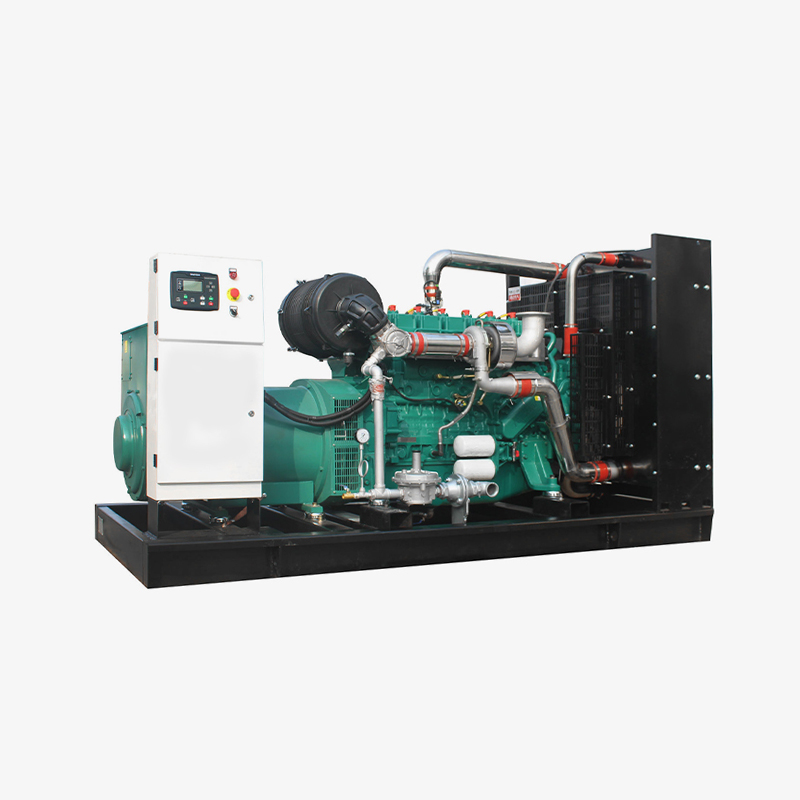
This 20% overhead ensures your standby power gas generator set functions reliably without constant strain. It accommodates unforeseen load spikes effortlessly. Furthermore, it leaves valuable room for future facility expansions. You protect your investment by keeping the engine in its optimal, stress-free operating range.
Your calculated wattage only represents your theoretical need. Real-world conditions actively reduce a machine's ability to produce power. You must adjust your expectations based on several external variables.
Fuel chemistry dictates engine output. Natural Gas (NG) and Liquid Propane (LP) possess different energy densities. Natural gas contains fewer BTUs per cubic foot than propane. Consequently, generators produce slightly less power when burning NG. An engine rated for 50kW on propane might only yield 45kW on natural gas. Always verify the fuel-specific ratings on the data sheet.
Additionally, utility infrastructure often limits performance. You face significant risks if you ignore gas meter sizing. A backup unit cannot reach its full load if the utility gas meter restricts fuel flow. Inadequate pipe diameters starve the engine during peak demand. Consult your utility provider to ensure your meter accommodates the required cubic feet per hour.
Physical geography alters engine performance drastically. Manufacturers test equipment under ideal sea-level conditions. Your specific location requires mathematical derating.
Always review your gas generator set specifications closely to locate the manufacturer's official derating charts.
Electrical phases change how we calculate load. Residential sites typically utilize single-phase power. Single-phase systems operate with a power factor of 1.0. Commercial and industrial facilities usually utilize three-phase setups. Three-phase systems calculate load using a 0.8 power factor. This technical distinction alters capacity requirements significantly for commercial deployments.
Buyers must choose between off-the-shelf convenience and engineered precision. Your site constraints dictate which path makes operational sense.
Standard units ship directly from the factory with predetermined configurations. They work perfectly for standard residential homes or light-commercial sites. These locations usually feature straightforward load profiles and ample clearance zones.
Choosing a standard package speeds up procurement timelines drastically. Installation remains relatively simple. Warranty structures stay streamlined since no third-party modifications exist. If you have an open concrete pad and typical HVAC loads, a standard unit suffices.
Complex site limitations demand specialized engineering. Off-the-shelf units fail in highly regulated or harsh environments. You must upgrade components to survive specific localized challenges.
When facing these hurdles, you must specify a custom gas generator set to guarantee reliability and compliance.
Your hardware only performs as well as the team supporting it. Selecting the right partner prevents installation disasters and ensures long-term reliability.
Avoid vendors who simply take your order over the phone. Look for suppliers who conduct comprehensive on-site load audits. Professional engineers walk your facility, inspect your panels, and measure actual running currents. They never rely solely on customer-provided math. Turnkey providers handle the entire lifecycle, from utility coordination to pouring the concrete pad.
Trust demands transparency. A trustworthy gas generator set supplier will openly explain their underlying assumptions. They will walk you through their calculations regarding starting watts and environmental derating. If they recommend load management modules to downsize the required engine, they should explain exactly how those modules will shed non-essential loads during an outage.
Evaluate the provider’s preventative maintenance plans before signing a purchase order. Ask about their guaranteed emergency response times. A regional grid failure stresses local service teams. You need a partner with a deep local parts inventory and enough certified technicians to reach your facility rapidly.
Consider the structure of the dealership. An authorized single-brand dealer possesses deep, specialized knowledge of one specific product line. They offer excellent factory support. Conversely, an independent supplier specs multiple brands. They remain brand agnostic. This allows them to weigh the pros and cons of different manufacturers objectively. They help you find the absolute best gas generator set for your unique budget and technical constraints.
Proper sizing remains a highly formulaic process. You must carefully balance peak surge demands against environmental realities and budget constraints. Ignoring the starting watts of inductive loads or forgetting to derate for altitude leads to immediate failure. Undersizing destroys equipment, while oversizing drains capital.
Your next step requires decisive action. Finalize your internal load inventory today. Separate your critical survival circuits from your convenience loads. Once you possess this baseline data, consult with a certified electrician or a professional power provider to verify your math.
Do not leave your facility's resilience to chance. Contact a specialized provider to request a professional site walk-through. A customized sizing audit guarantees your backup power operates flawlessly when the grid fails.
A: Running watts represent the continuous power an appliance needs to stay on during normal operation. Starting watts, often called surge watts, represent a brief two-to-three-second spike of extra power. Motor-driven appliances, like compressors and pumps, require this massive power surge merely to overcome resting inertia and start spinning.
A: No. Natural gas contains a lower energy density than liquid propane. Engines extract less mechanical energy from it. A generator rated to produce 20kW on propane might only produce 18kW on natural gas. You must always check the fuel-specific ratings on the manufacturer's data sheet.
A: Yes. Installing a Smart Management Module (SMM) or a load-shedding ATS allows you to safely utilize a smaller unit. These intelligent systems automatically lock out heavy, non-essential loads, such as hot tubs or secondary air conditioners, whenever the backup system nears its maximum capacity.
A: You must calculate the total BTUs of your home’s existing gas appliances. Then, add the generator's full-load BTU requirement to that number. If this combined total exceeds the gas meter's rated capacity, you must contact your utility company for a meter upgrade prior to installation.