Newtec Power Equipment Co., Ltd.
English


Views: 0 Author: Site Editor Publish Time: 2026-08-26 Origin: Site
Every buyer faces a difficult decision when upgrading vessel power. Do you choose an off-the-shelf unit? Or do you need a precision fit? Commercial fleets, refits, and specialty yachts often require tailored power solutions. Standard units offer quick availability and predictable pricing. Conversely, bespoke builds solve serious spatial and operational constraints. They adapt to unique hull shapes and heavy power demands.
However, custom solutions introduce longer lead times. They also require higher upfront engineering costs. You must weigh these factors carefully before signing a purchase order. Marine power is never one-size-fits-all. Standard generators work exceptionally well for simple applications. Complex vessels, however, demand specialized engineering.
This article provides a clear, engineering-backed evaluation framework. You will learn exactly when a customized power solution becomes strictly necessary. We will explore key triggers like complex load profiles and engine room dimensions. You can then determine the best path for your vessel's specific operational profile.
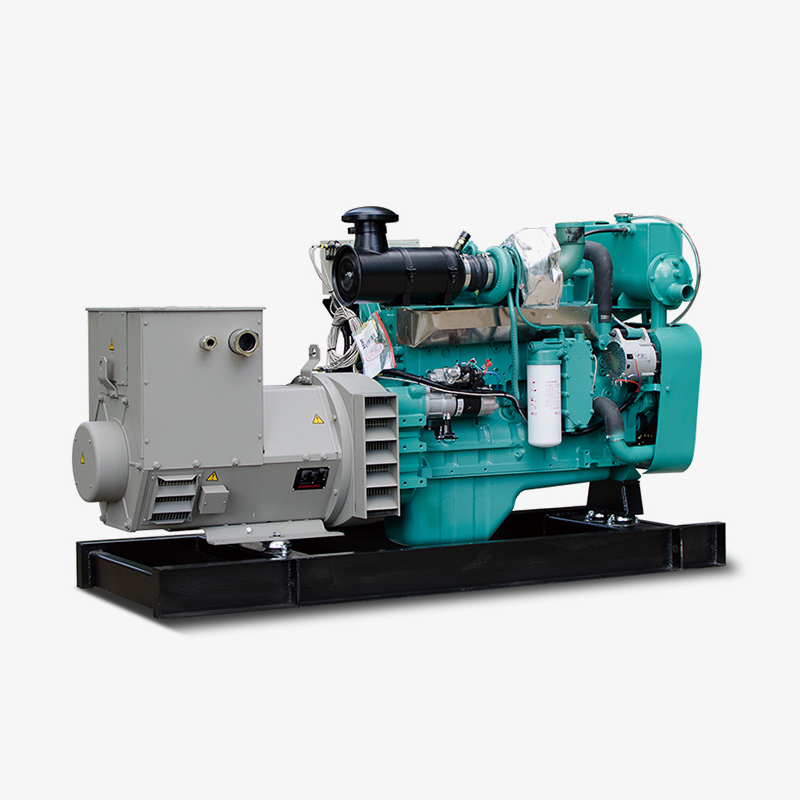
You must understand the baseline before upgrading your power systems. Manufacturers design standard units for broad market appeal. These units feature pre-packaged engine and alternator combinations. They use standard sound enclosures. They also rely on fixed dimensions. Standard models meet the generic needs of recreational boating. They work well when space and power demands remain predictable. Most standard units use basic heat exchanger cooling systems. They provide fixed voltage and frequency outputs.
Customization entails significant engineering adjustments. Bespoke designs alter the physical and electrical characteristics of the unit. Engineers might create custom footprints to fit narrow hulls. They often integrate specialized Power Take-Offs (PTOs) to drive hydraulic systems. You might see split-system cooling arrangements. Manufacturers can also wind alternators for non-standard voltage or frequency outputs. When you specify a marine generator set, you adjust these variables to match vessel requirements exactly.
We recommend a clear default rule for buyers. You should default to standard units whenever possible. Standard units ship faster. They simplify warranty claims. Global service technicians understand them well. You should only abandon standard units if you trigger one of three specific operational constraints. These constraints involve space, load, or environment.
Generator Comparison Matrix
| Feature | Standard Unit | Custom Unit |
|---|---|---|
| Dimensions | Fixed catalog sizes | Adaptable to structural limits |
| Power Output | Fixed engine/alternator pairs | Oversized alternators available |
| Cooling Systems | Standard heat exchangers | Keel cooling or split-systems |
| Lead Time | Available from stock (2-4 weeks) | Extended engineering (12-20 weeks) |
Vessel operators often push power systems beyond standard limits. When standard equipment fails to meet operational demands, you must customize. We have identified three distinct triggers. If your vessel hits any of these criteria, you need a specialized build.
Space presents the hardest constraint in marine engineering. New vessel builds plan around generator dimensions. Refit projects face an entirely different reality. Standard generators simply cannot pass through existing bulkheads. They cannot fit down narrow companionway hatches. You face two choices. You can cut open the steel hull. Or you can buy a generator shaped to fit.
We see this refit reality constantly. Tearing down vessel structures costs enormous sums. It delays project timelines drastically. Custom form factors solve this problem elegantly. Engineers can design low-profile configurations. They shift bulky components away from the top of the engine. They remote-mount the control panels elsewhere. Some manufacturers offer modular "knock-down" designs. These units arrive in pieces. Technicians carry them through small doors. They assemble the unit inside the compartment. This strategy saves thousands in yard fees.
Serviceability remains equally critical. Inside restricted engine rooms marine generator set components must remain accessible. Routine maintenance keeps vessels running safely. Mechanics need clear access to oil filters. They must reach dipsticks easily. They need to inspect raw water pump impellers often. Standard units place service points on both sides. If you push a standard unit against a hull wall, mechanics cannot reach the back. A custom build redesigns the component layout. It places all filters, pumps, and drains on one accessible side. This single-side serviceability prevents neglected maintenance.
Evaluating power systems requires deep technical analysis. Buyers frequently focus on the basic continuous rating (kW). This single metric misleads many owners. You must look beyond simple continuous output. Real-world marine loads fluctuate violently. You need to analyze the motor starting capability.
Motor starting capability uses a metric called skVA. It measures how much power the alternator supplies during a fraction of a second. Standard units might produce 50 kW continuously. They might only provide 70 skVA for starting. If your commercial refrigeration requires 100 skVA to start, the standard unit fails. Step-load performance also matters. It measures how the engine responds when you activate a massive load suddenly. Carefully matching your marine generator set specifications ensures stable voltage across all electrical panels.
Parallel operations offer another advanced load solution. Many buyers assume they need one massive standard generator. This creates inefficiencies. A giant generator running a small nighttime load suffers from "wet stacking." Unburned fuel damages the engine. Instead, customize two smaller units. They run in parallel during peak daytime loads. At night, one unit shuts down. The single running unit operates at optimal load capacity. This strategy provides critical redundancy. It also improves fuel efficiency dramatically.
Modern vessels increasingly utilize hybrid energy systems. Generators no longer operate in isolation. They must interface seamlessly with DC battery banks. They interact with large solar arrays. They integrate into hybrid propulsion energy management systems. Standard alternators struggle to charge massive lithium-ion banks safely. Custom builds integrate specialized regulators. They communicate directly with the vessel's central power management computer. This ensures efficient, automated energy balancing.
Bespoke builds demand higher initial capital. A custom unit typically carries a 20-40% price premium over standard catalog models. You must evaluate this premium against real-world installation efficiencies. This cost-benefit analysis reveals the true value of custom engineering.
Hidden costs ruin refit budgets quickly. Modifying a vessel to accept a standard unit requires extensive labor. You pay for expensive yard time. Shipwrights must perform complex fiberglass or steel work. Plumbers must reroute exhaust piping and raw water lines. Electricians must extend heavy copper cables. When you design a generator to fit the existing space, you eliminate these hidden fees. The upfront engineering premium easily offsets the massive structural modification costs.
Compliance and certification risks add another layer of complexity. Commercial vessels adhere to strict marine classification societies. ABS, DNV, and Lloyd's Register demand rigorous safety standards. You cannot simply modify a standard generator in the field. Field modifications void manufacturer warranties immediately. They also violate emissions standards like EPA Tier 3/4 or IMO Tier II/III. A custom build ships from the factory fully certified. The manufacturer maintains complete responsibility for emissions compliance and class approvals.
Buyers sometimes question the long-term reliability of custom equipment. They worry about lifecycle support. This skepticism makes sense. Sourcing proprietary parts in remote ports causes severe delays. The best custom builds solve this by utilizing standard core components. The engine block remains standard. The alternator end remains standard. Engineers only customize the skid, enclosure, and cooling brackets. This guarantees global parts availability. You maintain high reliability while solving your unique spatial challenges.
Choosing the right manufacturing partner dictates your project's success. Not all vendors handle complex engineering well. You must vet your supplier thoroughly. Look for deep engineering competence before requesting quotes.
Evaluate their in-house design capabilities. A premier marine generator set supplier uses advanced 3D CAD modeling. They request your engine room scans. They drop their 3D generator model into your virtual hull space. This guarantees a perfect fit before cutting any steel. Ask about their testing facilities. They must perform custom load-bank testing prior to shipping. This testing proves the unit handles your specific skVA requirements. Do not accept a unit tested only to generic catalog standards.
Transparency in lead times separates great vendors from poor ones. Custom parts require extended manufacturing schedules. Specialized acoustic materials take time to source. Custom-wound alternators delay assembly lines. A trustworthy vendor provides realistic supply chain timelines. They update you throughout the engineering phase. They never promise standard delivery times for bespoke builds.
Finally, examine their global support network. This remains the most critical vetting factor. Your skid and sound enclosure might be entirely unique. The consumable parts, however, must be universally accessible. Ensure the vendor uses globally supported engines. Verify their diagnostic software is available to local mechanics worldwide. A strong support network keeps your vessel operational long after the initial installation.
Deciding between standard and custom power relies on a clear matrix. Choose standard units for new builds possessing ample engine room space. Stick to standard configurations if your electrical loads remain predictable. You will benefit from faster shipping and lower upfront costs. Conversely, choose custom builds for vessel refits. Mandate custom engineering when facing specific inductive load profiles. Demand specialized setups when strict NVH limits govern your passenger experience.
Your next step requires gathering hard data. Do not guess your power requirements. Hire an engineer to conduct a comprehensive electrical load analysis. Capture a precise 3D space scan of your engine compartment. Armed with this data, you can request accurate quotes from suppliers. You will secure a marine generator that integrates flawlessly into your vessel.
A: A bespoke build typically costs 20% to 40% more than a standard unit's MSRP. This premium covers in-house engineering fees, specialized CAD modeling, custom bracket fabrication, and low-volume component sourcing. However, this upfront cost frequently saves thousands in structural hull modifications during installation.
A: Look closely at the motor starting capability (skVA) to ensure you can start heavy inductive loads like commercial pumps. Check the alternator temperature rise limits to ensure longevity. Finally, verify the continuous kW rating accurately reflects your vessel's operational ambient temperatures.
A: We strongly advise against post-purchase modifications. Altering cooling systems, exhaust routing, or enclosures in the field instantly voids manufacturer warranties. Furthermore, unauthorized changes compromise EPA or IMO emissions certifications and will fail marine classification society inspections.
A: You should expect realistic lead times between 12 and 20 weeks. Slight modifications, like changing a PTO bracket, might take 8 weeks. Ground-up builds requiring custom footprints, specialized acoustic shields, and non-standard alternators require extensive engineering and extended supply chain coordination.