Newtec Power Equipment Co., Ltd.
English


Views: 0 Author: Site Editor Publish Time: 2026-06-12 Origin: Site
Unplanned electrical downtime instantly strips away revenue. It also invites serious compliance risks. Modern facilities simply cannot rely on unverified backup solutions when the utility grid fails. A robust standby diesel generator acts as a critical risk-mitigation asset. You should not treat it as just another standard equipment purchase. You need a power system known for reliable transient response. You also need an extensive global dealer network and immediate parts availability. Cummins consistently delivers on these tough operational fronts.
This comprehensive guide helps facility managers, engineers, and procurement teams. We will help you confidently navigate the entire selection process. We will show you exactly how to evaluate load sizes. You will learn to choose the appropriate product lines. Finally, we will help you specify the ideal unit for your specific commercial or industrial standby projects.
Sizing is critical: Oversizing leads to engine damage (wet stacking) and wasted capital; undersizing causes system failure during load spikes.
Enclosures dictate placement: Local zoning laws and footprint constraints determine whether an open unit or a silent diesel genset is required.
TCO goes beyond the sticker price: Installation, automatic transfer switch (ATS) integration, fuel maintenance, and emissions compliance account for up to 50% of the lifetime cost.
Dealer support matters: A successful deployment relies heavily on local engineering audits and post-installation service availability.
You must accurately calculate your facility loads. A reliable backup power generator demands precise engineering math. Guesswork leads to catastrophic system failures during an actual outage.
Categorize Your Loads: Start by separating your power demands. Divide them into critical and non-essential categories. Critical loads include life safety systems. They also include data servers and primary HVAC units. Non-essential loads usually cover decorative lighting or breakroom appliances. This separation prevents your system from overloading. You can sequence these loads smartly during an emergency.
Starting vs. Running kW: Next, evaluate starting versus running kilowatts. Many buyers only look at running wattage. This is a common and dangerous mistake. Motors and compressors require massive power surges to start. We call this sudden draw inrush current. It often spikes to three times the standard running wattage. Relying solely on running wattage causes serious problems. The generator will stall during startup. You must size the alternator to handle these transient spikes.
The Risk of Oversizing (Wet Stacking): Avoid the urge to oversize your unit. Buying a massive machine just in case is a strict technical error. Diesel engines operate best under heavy loads. They need high combustion temperatures to burn fuel cleanly. Running below 30% load keeps the engine block too cool. Unburned fuel and soot build up inside the exhaust system. Industry professionals call this wet stacking. It ruins engine components. It also drastically reduces overall reliability.
Future-Proofing: You should plan for future facility expansion. Build a verified 15–20% capacity buffer into your final calculations. This allows you to add new equipment later. It ensures you do not violate the minimum load requirements. You get flexibility without risking harmful wet stacking.
Cummins manufactures distinct equipment tiers. Each series addresses a specific industrial or commercial application. You must align your facility needs with the proper engineering family. Selecting the right Cummins generator guarantees better performance and compliance.
This series works best for clinics, retail spaces, and small offices. These environments prioritize unobtrusive operation. Space is usually highly restricted. You need a compact footprint. The key evaluation metric here focuses on ultra-low decibel ratings. They fit easily near property lines without violating local noise ordinances.
These units serve mid-sized manufacturing plants, agriculture facilities, and municipal buildings. They offer excellent operational balance. The key evaluation metrics include high power density and optimized fuel efficiency. They also feature strict EPA Tier compliance. These engines handle variable loads exceptionally well. They provide stable power during extended regional outages.
Data centers, large hospitals, and heavy industrial plants rely on the QSK series. These are massive power plants. They deliver mission-critical reliability. The key evaluation metrics focus on complex paralleling capabilities. They also boast incredibly rapid transient response times. They can accept 100% block loads in a single step. This perfectly satisfies NFPA 110 requirements for life safety applications.
Product Series | Ideal Use Cases | Key Evaluation Metrics |
|---|---|---|
QuietConnect™ | Clinics, retail spaces, small offices | Ultra-low decibels, compact footprint |
Centum™ & QSB/QSL | Manufacturing, agriculture, municipal | High power density, EPA Tier compliance |
QSK Series | Data centers, hospitals, heavy industry | Mission-critical reliability, rapid transient response |
The physical environment dictates your enclosure choice. You cannot place an open engine in a suburban parking lot. You also do not need an expensive sound-attenuated box inside a dedicated basement bunker.
Use Case: Dedicated indoor mechanical rooms or specialized concrete enclosures.
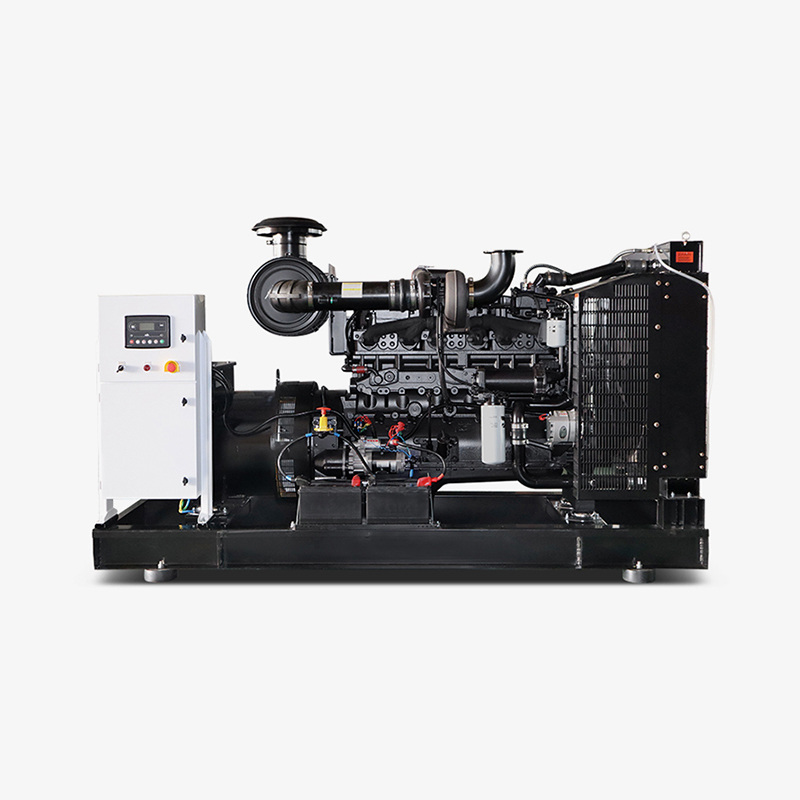
Implementation Reality: Open units demand intense architectural planning. They require custom exhaust routing through the building structure. You must install structural vibration isolation mounts. The room also needs heavy ventilation engineering. You have to move massive volumes of cooling air over the engine block.
Use Case: Basic outdoor protection in industrial zones.
Implementation Reality: These steel or aluminum boxes protect the engine against rain and snow. However, they offer minimal sound dampening. They allow the engine noise to escape freely. You might violate municipal noise ordinances if you place them near residential properties. They work well only in remote or heavy-manufacturing areas.
Use Case: Hospitals, urban commercial zones, and mixed-use areas.
Implementation Reality: A true silent diesel genset uses advanced acoustic materials. It features baffled air intakes and custom residential-grade exhaust silencers. They are significantly heavier. They require a larger physical footprint. They also carry a higher upfront price tag. However, they drastically reduce decibel levels. They easily meet strict local noise compliance codes.
Securing the physical equipment is only the beginning. The deployment phase introduces complex logistical variables. You must plan for these operational realities early in the design cycle. A poor implementation strategy paralyzes the best equipment.
A standby power unit is useless without a properly matched Automatic Transfer Switch (ATS). The ATS monitors the utility grid continuously. When it detects a failure, it signals the engine to start. It then physically isolates your building from the grid. This prevents dangerous back-feeding. Finally, it routes the generated power to your breaker panels. You must specify an ATS perfectly matched to your facility amperage. Complex sites might require advanced switchgear for seamless closed-transition handoffs.
You must carefully size your sub-base fuel tanks. Consider your desired runtime. A 24-hour tank works for urban areas. A 48-hour or 72-hour tank suits remote locations. Diesel fuel degrades over time. Moisture and microbes ruin fuel stored longer than six to twelve months. You should integrate an automated fuel polishing system. This system filters and circulates the diesel periodically. It ensures clean fuel hits the injectors during an emergency.
Local environmental regulations heavily influence your equipment choice. Map out your EPA Tier requirements early. Emergency standby applications typically require EPA Tier 2 compliance. Non-emergency setups usually mandate strict EPA Tier 4 Final certifications. These advanced units use selective catalytic reduction (SCR) and diesel exhaust fluid (DEF). You must accommodate these extra fluid tanks in your site footprint.
Physical installation demands rigorous coordination. You cannot simply drop the unit on the dirt. You must pour thick, steel-reinforced concrete pads. You often need to hire specialized crane rigging crews. Electrical routing requires heavy-gauge copper wiring and protective conduit. Furthermore, local permitting agencies will inspect every detail. These logistical steps require deep planning and experienced project managers.
You now understand your loads, enclosures, and operational constraints. It is time to formalize your procurement strategy. Buying an industrial generator requires systematic validation.
Do not rely on old utility bills. Hire a licensed electrical engineer. Alternatively, engage a certified Cummins dealer. Ask them to attach data loggers to your main electrical panels. They should record your peak facility usage over a full 30-day period. This captures accurate transient spikes. It also records variable operational loads. This hard data perfectly sizes your Cummins diesel generator.
Contact your local authorities before finalizing any purchase. Check your municipal noise ordinances. Some cities limit nighttime noise to 65 decibels at the property line. Review local emissions standards. Look into specific fire codes regarding onsite diesel fuel storage. Some jurisdictions require double-walled tanks with advanced leak detection sensors. Finding these rules early prevents expensive redesigns.
Even the best equipment requires ongoing maintenance. Evaluate the local dealer network. Review their guaranteed response times for emergency service. Look for strict Service Level Agreements (SLAs). A four-hour emergency response guarantee is ideal for critical facilities. Review the standard warranty terms. Ensure they cover parts, labor, and technician travel time for at least two to five years.
Choosing the right equipment requires careful analysis. You must balance your peak load demands against physical site constraints. You also have to consider long-term operational realities like fuel maintenance and local compliance. Avoid using standard rule-of-thumb estimates. They often lead to dangerous undersizing or wasteful oversizing.
Your next step is clear. Gather your facility diagrams. Engage a certified electrical contractor or regional distributor. Ask them to perform a formal load study. Request a comprehensive physical site audit. Do these things before requesting a final equipment quote. This disciplined approach guarantees reliable power when the grid inevitably fails.
A: Run times depend heavily on your sub-base fuel tank capacity and oil maintenance intervals. Typically, they can run for days if you actively replenish the fuel and monitor oil levels. However, manufacturers design them strictly for temporary outages. They are not intended for continuous prime power applications.
A: Industrial units commonly exceed 15,000 to 20,000 running hours. In a typical standby application, this translates to 20 to 30 years of reliable service. You must strictly adhere to maintenance schedules. This includes changing fluids, replacing filters, and conducting annual load bank testing.
A: No mechanical generator is entirely silent. Sound-attenuated enclosures reduce operating noise to acceptable municipal levels. They often achieve 65 to 75 dBA at 7 meters. This sounds similar to normal street traffic. They dampen the acoustic energy rather than eliminating it entirely.
A: Standby ratings allow the unit to run at 100% load for the duration of an outage. However, running constantly at absolute maximum capacity reduces the overall engine lifespan. Engineers typically target an 80% load factor. This practice ensures optimal fuel efficiency and maximum mechanical longevity.