Newtec Power Equipment Co., Ltd.
English


Views: 0 Author: Site Editor Publish Time: 2026-06-23 Origin: Site
Industrial power outages carry massive financial penalties. Every minute a production line sits idle, revenue hemorrhages rapidly. Conversely, procuring heavy-duty power systems demands significant capital expenditure. Selecting an engine is never merely a basic hardware purchase. You are actively integrating a critical infrastructure asset into your facility. Mistakes in capacity sizing or compliance planning lead to catastrophic equipment failures during grid blackouts.
This comprehensive guide strips away marketing fluff entirely. It provides a purely technical and operational framework for modern engineers. We cover load sizing protocols, emission standard evaluations, and lifecycle maintenance economics. You will learn exactly how to match engine capabilities to your specific facility demands. We detail realistic performance metrics, site engineering hurdles, and procurement strategies to guarantee implementation success.
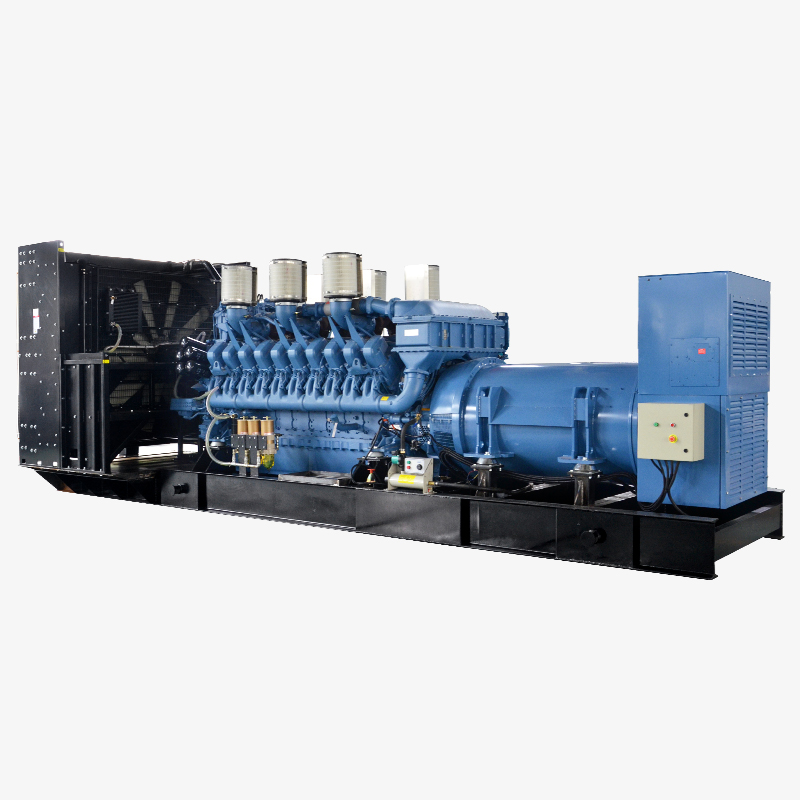
Selecting the right MTU generator requires moving beyond base wattage to calculate step-load acceptance and motor starting currents.
The 300-3500kVA generator range offers distinct configurations; choosing the right tier depends directly on your plant’s emission mandates and spatial constraints.
Total Cost of Ownership (TCO) for a heavy duty generator is heavily weighted by fuel efficiency during peak loads and the availability of certified MTU service technicians in your region.
Implementation success relies on anticipating site-specific engineering hurdles: ventilation, exhaust routing, and fuel storage compliance.
Standard commercial generators often fail in heavy manufacturing environments. Harmonic distortion from automated robotics wreaks havoc on sensitive alternators. Sudden massive load spikes from heavy machinery easily stall under-sized engines. You must calculate the true dynamic load accurately. Do not rely on basic building averages. We always recommend distinguishing strictly between continuous, prime, and standby power ratings. Continuous units run constantly at a steady load. Prime units handle variable loads for unlimited hours. Standby units provide emergency power exclusively during grid failures.
Consider a plastic injection molding facility. Starting the massive extruders draws three to eight times normal running current. If you ignore these motor surges, your breaker will trip instantly. Variable Frequency Drives (VFDs) also induce harmonic currents heavily. These currents overheat standard alternator windings quickly. You must oversize the alternator to compensate appropriately.
Determine where your facility falls within the typical 300-3500kVA generator spectrum. Smaller fabrication shops might need a single 500kVA unit. Massive chemical processing plants often demand multiple 2500kVA units. Address the viability of a single massive block versus a paralleled multi-unit configuration. Paralleling provides built-in redundancy automatically. It allows maintenance on one unit while others keep production online seamlessly. A single massive unit costs less upfront. However, a single unit creates a single point of failure. Engineers usually prefer paralleled arrays for critical manufacturing lines.
Examine the core architecture carefully. MTU builds distinct engine blocks for different applications. Series 1600 units provide compact power densities. They fit easily into tight retrofit locations. Series 2000 models tackle mid-range continuous applications perfectly. Series 4000 engines dominate extreme industrial environments. The Series 4000 utilizes common-rail fuel injection. It delivers precise fuel metering constantly. This prevents fuel waste during transient load shifts.
Load acceptance serves as a critical performance metric. MTU engines excel at aggressive block-load acceptance. They restore power rapidly during catastrophic grid failures. This rapid response guarantees zero-interruption factory backup power. Fuel efficiency also matters deeply during extended outages. MTU integrates the Advanced Diesel Engine Control (ADEC) system natively. ADEC optimizes fuel injection timing dynamically. It reduces fuel consumption significantly during long run times.
We must remain objective about hardware limitations. An MTU diesel generator represents a highly engineered premium solution. For low-criticality commercial sites, this represents a massive capital over-investment. Non-industrial sites rarely need this extreme level of robust engineering. Only deploy these systems where power loss means severe financial ruin.
Environmental compliance dictates your equipment choices strictly. You must connect your site location directly to EPA emission standards. Understand Tier 2, Tier 3, and Tier 4 Final requirements thoroughly. Local equivalents apply internationally across different regulatory zones. Authorities enforce these mandates strictly.
MTU integrates advanced exhaust aftertreatment natively. Selective Catalytic Reduction (SCR) lowers nitrogen oxide emissions using specialized urea fluid. Diesel Particulate Filter (DPF) technology captures unburned soot effectively. These components add physical bulk to the installation footprint.
Installation carries heavy site engineering risks. You need strict vibration and acoustic isolation continuously. Proper mounting protects sensitive manufacturing processes nearby. High-frequency vibrations ruin precision machining calibrations instantly. You must install spring isolators underneath the base frame.
To ensure a safe installation, strictly follow these structural guidelines:
Calculate total required airflow across the radiator core accurately.
Design insulated exhaust piping runs meticulously to prevent fires.
Install structural vibration isolators below the skid frame securely.
Verify local fire codes regarding indoor diesel fuel storage limits.
Acoustic regulations also limit decibel outputs severely. Standard open-skid units exceed OSHA noise limits quickly. Sound-attenuated enclosures drop noise levels below 75 decibels at seven meters. Thermal dynamics require massive air movement. Radiator cooling fans pull thousands of cubic feet per minute. You must calculate intake louver sizes accurately. Restricting airflow causes rapid overheating. Engine shutdown follows immediately.
EPA Standard | Primary Application | Required Aftertreatment |
|---|---|---|
Tier 2 | Emergency Standby (Most regions) | Minimal / None |
Tier 3 | Strict Standby Zones | Internal engine optimization |
Tier 4 Final | Prime Power / Non-attainment zones | SCR and DPF required |
Initial purchase price accounts for a minor fraction of lifecycle expenditures. We focus heavily on operational expenditures instead. Capital expenditure usually represents less than 30 percent of total long-term costs. Ignoring post-purchase costs destroys facility budgets rapidly.
Fuel burn rates fluctuate wildly based on applied loads. A heavy duty generator consumes fuel non-linearly. Running units at extremely low loads decreases thermal efficiency. This causes wet stacking. Wet stacking pushes unburned fuel into the exhaust system.
Load Percentage | Relative Fuel Efficiency | Engine Wear Impact |
|---|---|---|
50% Load | Moderate Efficiency | Potential wet stacking over extended times |
75% Load | Optimal Efficiency | Ideal thermal operating temperatures maintained |
100% Load | Maximum Burn Rate | Increased mechanical stress over continuous days |
Routine maintenance dictates equipment longevity entirely. Standard intervals trigger based on hours-run or chronological time strictly. Usually, you service the unit annually or every 250 operating hours. The biggest operational risk factor remains technician access. You must ensure local availability of certified MTU technicians. A strong OEM parts supply chain prevents extended downtime. MTU generator networks share infrastructure heavily across global markets. This ensures rapid parts deployment during regional grid emergencies.
Create a rigorous vendor scorecard immediately. Develop a weighted matrix systematically. Compare unit specifications. Evaluate lead times closely. Factory orders sometimes take forty weeks to deliver. Review warranty terms carefully. Does the warranty cover travel time for remote technicians? Assess local dealer support capabilities rigorously before signing. A great engine fails if nobody can fix it locally.
Standard units rarely fit industrial plants perfectly. Determine your exact auxiliary components early. Will you need specialized automatic transfer switches? Do you require custom sound-attenuated enclosures? Are extended belly tanks necessary for regulatory runtime compliance? Bundle all these specific requirements into your initial RFQ.
Finalize your single-line electrical diagram first. Complete your site load profile thoroughly. Once prepared, engage an authorized distributor. Request a comprehensive final bid. An industrial diesel genset demands precise engineering documentation. Never guess your load capacities. Utilize load bank testing data if replacing older equipment.
An MTU system delivers uncompromising performance in high-stakes environments consistently. They only succeed when precisely sized. You must plan for acoustics, exhaust, and load dynamics beforehand. Subpar planning results in overheated engines and catastrophic plant shutdowns.
We recommend taking the following actionable steps immediately:
Calculate motor starting surges before selecting overall power capacity.
Match EPA tier ratings strictly to your specific regional mandates.
Verify local availability for certified OEM maintenance technicians.
Require a comprehensive site engineering analysis before pouring concrete pads.
Consult a certified structural engineer immediately. Involve an electrical engineer early in the site prep phase. Contact a specialized dealer. Secure technical drawings and confirm unit availability today.
A: Standby ratings define maximum power exclusively during emergency grid failures. Manufacturers restrict standby usage strictly to around 200-500 hours annually. Prime ratings allow continuous operation at variable loads for unlimited hours. Using a standby unit for prime applications instantly voids your warranty.
A: MTU and Detroit Diesel share a long, integrated brand history. Both entities now operate under Rolls-Royce Power Systems. This corporate structure guarantees strong parts compatibility. Buyers enjoy a massive, unified service network across global markets.
A: Yes, they offer excellent modular scalability. You can parallel multiple units easily. MTU uses advanced digital master controllers to synchronize engines perfectly. This modular approach lets you add units incrementally as facility demands grow.
A: A properly maintained industrial unit lasts decades. You can expect 20,000 to 30,000 operating hours before requiring a major engine overhaul. Reaching this milestone demands strict, uncompromising adherence to all OEM maintenance schedules.