Newtec Power Equipment Co., Ltd.
English


Views: 0 Author: Site Editor Publish Time: 2026-10-23 Origin: Site
Equipping a vessel with reliable power often brings immediate sticker shock. Buyers frequently encounter high upfront pricing for marine power systems. They also face the severe danger of unexpected installation expenses. Why do these units cost so much? Pricing fundamentally revolves around power output capabilities and fuel types. Manufacturers also build in costs for rigorous marine-specific safety certifications. Features like ignition protection and corrosion resistance remain non-negotiable for safe operation at sea. These specialized requirements naturally drive up the initial expense. We want to clear up the confusion surrounding these critical investments. This guide provides a transparent breakdown of base expenses and hidden implementation fees. You will learn crucial evaluation criteria to ensure your chosen system perfectly matches your vessel's specific load requirements. By the end, you will know exactly what to anticipate before requesting a formal quote from a shipyard.
Base Price Ranges: Portable units range from $500–$2,000; dedicated fixed marine generators typically range from $4,000 to over $20,000 based on kW output.
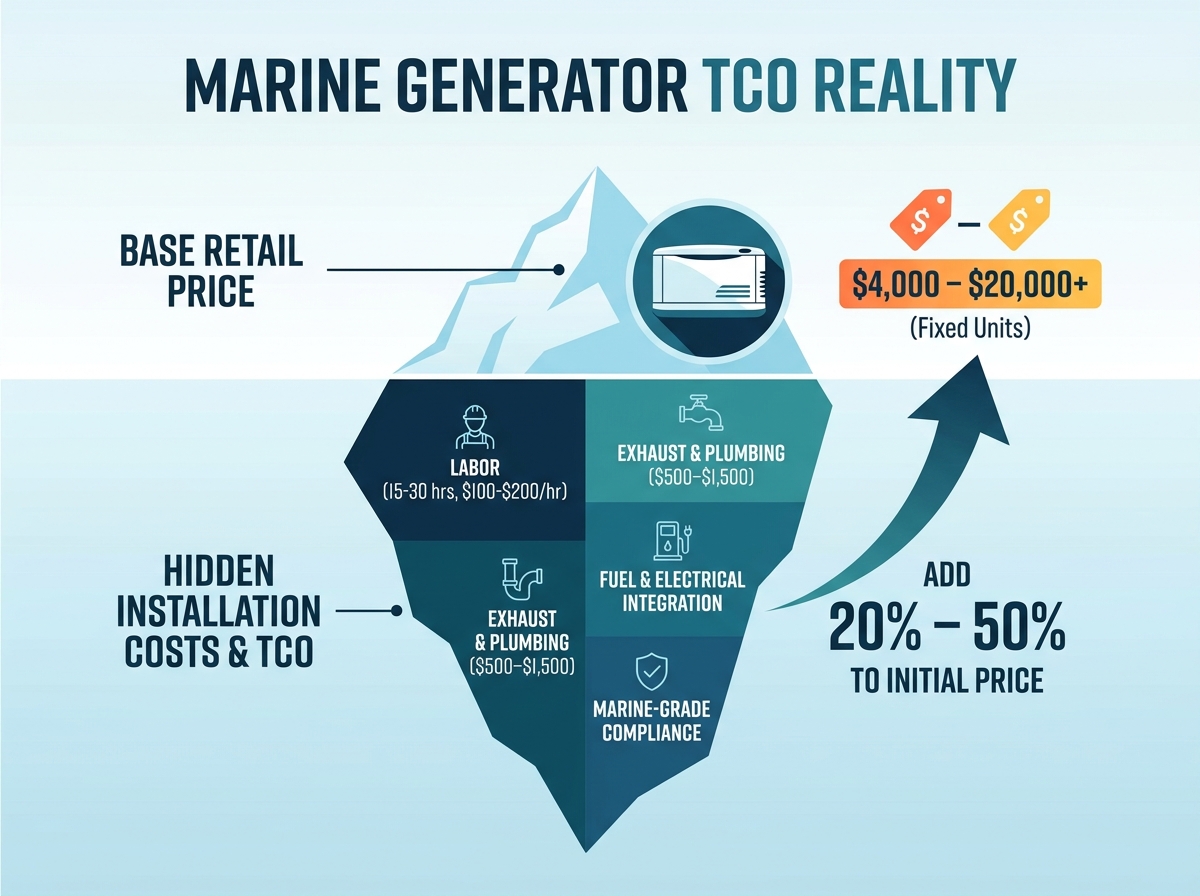
The TCO Reality: Installation materials and labor often add 20% to 50% to the initial retail price of a fixed generator.
Sizing is Critical: Over-sizing leads to engine damage (wet stacking in diesels), while under-sizing causes premature failure.
Fuel Strategy: Diesel generators command a higher upfront price but offer superior safety, longevity, and fuel efficiency compared to gasoline models.
Understanding market pricing starts with defining your specific vessel requirements. A dedicated Marine Generator serves as the heart of your boat's electrical grid. However, costs vary wildly depending on the power output you need. We can categorize these systems into three primary tiers.
Base Estimate Reference Chart
Generator Category | Power Range | Estimated Price | Typical Vessel Use |
|---|---|---|---|
Portable / Compact Units | 1,000W – 2,500W | $500 – $2,000 | Small vessels, day cruisers, basic charging |
Small Fixed Generators | 3kW – 5kW | $4,000 – $8,000 | Express cruisers, small sailboats |
Mid-Size to Large Generators | 6kW – 15kW+ | $8,000 – $20,000+ | Motor yachts, catamarans, commercial vessels |
Portable units represent the most affordable entry point. You can expect to spend between $500 and $2,000 for these models. They serve small vessels and day cruisers perfectly. Owners typically use them for basic battery charging or running small appliances. However, portable units come with strict limitations. You cannot integrate them into your boat's main electrical panel. Furthermore, they require safe, highly ventilated operation directly on the open deck. Operating a portable gasoline unit in enclosed spaces invites lethal carbon monoxide risks.
If you want built-in convenience, small fixed models provide a massive upgrade. These units cost between $4,000 and $8,000. Express cruisers and small sailboats benefit greatly from this power tier. A 4kW system easily handles a single air conditioning unit, a marine fridge, and basic navigation electronics. Manufacturers design these to sit inside the engine compartment. They tie directly into the vessel's fuel tanks and electrical systems. This integration offers genuine comfort while sitting at anchor.
Larger vessels demand robust, uninterrupted power. These models range from $8,000 to well over $20,000. Motor yachts, sailing catamarans, and commercial vessels rely on this category. A 10kW or 12kW system can simultaneously run multiple AC zones. It easily powers high-draw water makers, gyro stabilizers, and heavy galley appliances. Please note this tier excludes commercial superyacht systems exceeding 30kW. Shipyards price those massive units entirely through custom quotes.
Many boat owners wonder why marine power systems cost significantly more than residential standby units. The marine environment brutally punishes machinery. Manufacturers must engineer these units to survive salt air, constant vibration, and enclosed spaces. Let us examine the specific features that dictate the final price tag.
Your choice of fuel impacts both the upfront cost and operational safety. Diesel models generally cost 20% to 30% more upfront than gasoline equivalents. However, marine professionals overwhelmingly prefer diesel. Gasoline vapors remain highly volatile. They can pool in the bilge and create explosion hazards. Diesel fuel lacks this extreme volatility, making it far safer for enclosed engine rooms. Furthermore, diesel engines boast significantly longer lifespans. They offer much better fuel efficiency during continuous operation.
Heat management inside a cramped engine room requires specialized engineering. Cooling systems heavily influence the retail price.
Raw Water Cooling: These systems pump seawater directly through the engine block. They cost less to manufacture. Unfortunately, running salt water through hot metal accelerates corrosion. We only recommend this for freshwater boating or extreme budget applications.
Closed-Loop Cooling: This premium method uses a heat exchanger. The engine circulates protective antifreeze coolant internally. Seawater only cools the heat exchanger itself before exiting the exhaust. This costs more upfront but drastically extends engine life in harsh saltwater environments.
Nobody wants a deafening engine ruining a quiet evening at anchor. Factory sound shields serve as essential upgrades. These acoustic enclosures can add $500 to $1,500 to the base price. They utilize dense foam insulation and specialized mounting brackets to absorb vibration. A high-quality sound shield reduces operating noise to a gentle hum. It fundamentally improves your quality of life aboard the vessel.
Regulatory compliance inherently raises manufacturing expenses. Marine engines must meet strict USCG (United States Coast Guard) and ABYC (American Boat and Yacht Council) standards. Features like ignition protection prevent stray sparks from igniting bilge fumes. Spark arrestors on the exhaust system ensure safety. These specialized components do not exist on standard RV or home standby generators. Building a safe, compliant machine simply requires more expensive parts.
Choosing the correct capacity stands as the most vital step in your purchase journey. Guessing your power needs often leads to catastrophic financial consequences. You must properly size a Marine Generator to ensure a long, healthy lifespan.
Many buyers mistakenly believe bigger always means better. This logic fails miserably on boats. Oversizing a diesel unit leads to a condition called "wet stacking." When a diesel engine operates below 50% load, it fails to reach proper operating temperatures. Unburnt fuel glazes the cylinder walls. Carbon builds up rapidly in the exhaust system. This causes premature burnout and expensive yard bills. Conversely, under-sizing forces the unit to run constantly at maximum capacity. This inevitably leads to overheating and early mechanical failure.
You need a systematic approach to determine your exact power requirements. Follow this established calculation framework:
Audit Continuous Loads: List every electrical device you plan to run simultaneously. Include air conditioning, refrigerators, battery chargers, and water heaters. Calculate the total continuous running watts.
Factor in Surge Watts: Electric motors require a massive power spike to start up. An HVAC compressor might need 1,500 watts to run, but 3,500 watts just to start. You must account for the highest simultaneous starting surges in your math.
Apply the Efficiency Rule of Thumb: Aim for a unit that runs consistently between 50% and 80% of its maximum capacity during normal vessel operation. This sweet spot prevents wet stacking while leaving headroom for surge spikes.
Do not commit to a specific kW rating based solely on a rough guess. We strongly recommend hiring a marine electrician. Ask them to conduct a professional electrical load analysis on your vessel. A certified technician will measure your exact peak loads. This small upfront expense prevents thousands of dollars in future engine damage.
The retail price you see online only covers the machinery itself. Proper installation dictates the ultimate success of your power system. Many owners suffer sticker shock when they receive the final shipyard invoice. You must budget for extensive labor and supplementary materials.
Marine technicians possess highly specialized skills. You can expect to pay between $100 and $200 per hour for qualified marine yard labor. Standard installations usually take 15 to 30 hours. The exact time depends heavily on your vessel's layout. If mechanics must remove deck hatches or dismantle bulkheads to lower the unit into the bilge, labor costs will skyrocket.
A new power plant requires a completely independent exhaust and raw water plumbing system. You must purchase specialized marine-grade exhaust hoses. Installers will fit heavy-duty waterlocks and fiberglass mufflers to prevent flooding. They must drill new thru-hull fittings for water intake and discharge. Crucially, they must install anti-siphon valves to stop seawater from flowing backward into the cylinders. These necessary plumbing components typically add $500 to $1,500 to the project.
You cannot simply plug the unit into a wall socket. Technicians must run dedicated, coast-guard-approved fuel lines. They will install primary Racor fuel water separators to protect the delicate fuel injection system. On the electrical side, the yard must integrate heavy-duty transfer switches into your main AC panel. This prevents shore power and generator power from colliding and causing electrical fires.
Do not fall into the trap of buying a generic, unbranded machine to save cash. A "cheap" unbranded unit often features non-standard footprints. This makes installation incredibly difficult and drives up yard labor. Furthermore, obscure brands lack reliable parts availability. When a raw water pump fails in a remote cruising ground, a cheap unit becomes entirely useless. The combined expenses of difficult installations and impossible parts sourcing will quickly exceed the price of a premium brand within just three years.
The marine industry faces increasingly strict environmental regulations. Understanding these rules ensures your investment remains viable and legal for years to come. Regulatory compliance heavily influences both product availability and overall pricing.
Environmental protection agencies worldwide mandate strict emissions controls. Current EPA Tier 3 and Tier 4 regulations govern units sold in the United States. Internationally, the IMO Tier III framework dictates nitrogen oxide emissions. Manufacturers must utilize advanced engineering to meet these standards. They often implement high-pressure common-rail fuel injection systems. Some larger units now require diesel particulate filters. This advanced technology reduces pollution significantly. However, it also raises the manufacturing baseline cost. You must ensure any unit you purchase fully complies with the regulations governing your specific cruising regions.
A compliant, well-known brand genuinely maintains your vessel's resale value. When you eventually sell your boat, buyers will hire a marine surveyor. Surveyors ruthlessly scrutinize engine rooms. Non-compliant, obsolete, or obscure imported units almost always fail marine surveys. A failed survey gives the buyer massive leverage to depress your boat's valuation. Investing in a recognized, EPA-compliant brand protects your financial equity.
Machinery breaks. It represents an unavoidable reality of boating. When a breakdown occurs, global dealer support becomes your most valuable asset. A warranty means nothing if you cannot find a mechanic authorized to honor it. You must factor dealer networks into your purchasing decision. Ensure your chosen brand offers readily available replacement parts. Finding impellers, raw water pumps, or voltage regulators in remote island chains should not feel impossible. Premium brands boast extensive global networks. This accessibility keeps your vacation moving smoothly.
Purchasing a marine power system represents a serious infrastructure investment. As we have seen, the lowest retail sticker price rarely equates to the lowest long-term expense. You must account for critical factors like fuel safety, cooling systems, and specialized marine-grade compliance. Thoroughly planning for hidden installation costs ensures you never face unexpected financial surprises at the shipyard.
Take direct action before finalizing any purchase. First, complete a comprehensive electrical load audit to prevent destructive wet stacking. Second, choose a fuel type that seamlessly matches your main propulsion engines. Finally, always request comprehensive, itemized quotes from reputable shipyards. Ensure these quotes detail both the machinery and the specific yard installation fees. By following this framework, you guarantee a safe, reliable, and comfortable power solution for your vessel.
A: No. Standard portable and RV units lack critical marine safety features like ignition protection. Gasoline fumes easily pool in a boat's bilge. Using non-compliant equipment introduces severe explosion risks. Furthermore, standard portable units pose a massive carbon monoxide poisoning threat in enclosed spaces. They violate USCG safety regulations.
A: Lifespan depends heavily on fuel type and maintenance routines. High-quality diesel models can reliably last between 5,000 and 10,000 hours if serviced strictly by the manual. Gasoline models run hotter and typically reach the end of their usable life between 1,000 and 3,000 hours.
A: Usually, no. Fixed units typically draw directly from the vessel's primary fuel tanks. Installers use a dedicated fuel pickup tube for the generator. They cut this tube slightly shorter than the main engine's pickup. This clever safety feature ensures the generator cannot drain the tank completely dry.
A: Online retail prices usually only display the "bare generator end." They exclude necessary operating components. A comprehensive shipyard quote includes expensive additions like acoustic sound shields, specialized exhaust routing, raw water plumbing, electrical transfer panels, and dozens of hours of skilled marine labor.