Newtec Power Equipment Co., Ltd.
English


Views: 0 Author: Site Editor Publish Time: 2026-06-28 Origin: Site
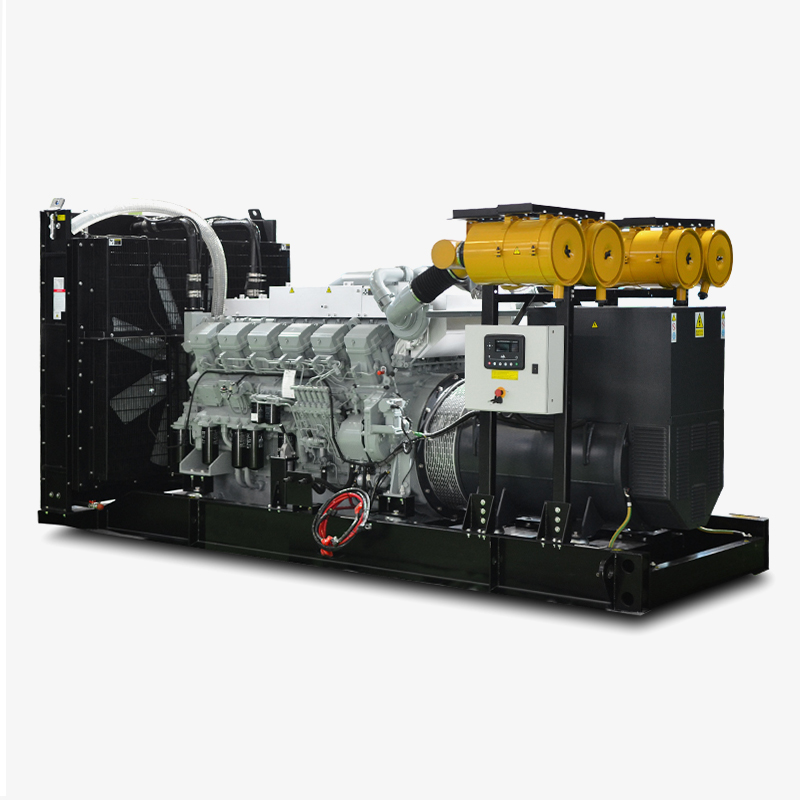
Power failures paralyze critical infrastructure rapidly. Data centers, healthcare facilities, and massive manufacturing plants face severe operational crises during utility outages. Instant blackouts disrupt essential tasks and introduce major safety hazards almost immediately. Selecting an industrial standby power framework remains a high-stakes decision for any facility manager. You cannot compromise on reliability when lives or vital data remain on the line. Unproven equipment introduces unacceptable vulnerabilities into your operational ecosystem. A Mitsubishi generator serves as a proven, engineering-led solution for these high-demand applications. You will discover specific performance thresholds setting this equipment apart from standard options. We will outline essential integration capabilities required for tight facility spaces. You will also learn how to establish lifecycle predictability for long-term operational security.
Targeted Capacity: Mitsubishi gensets in the 600-2500kVA range are specifically engineered to handle aggressive block loading and transient responses typical in heavy-duty environments.
Proven Reliability: Built on decades of industrial engine manufacturing, the Mitsubishi diesel generator offers high power density with verifiable lifecycle durability.
Implementation Focus: Successful deployment requires rigorous site planning, focusing on footprint constraints, fuel logistics, and emissions compliance.
Predictable TCO: Total Cost of Ownership is stabilized through fuel efficiency under partial and full loads, alongside standardized maintenance intervals.
Standard commercial units cannot support critical infrastructure effectively. We must differentiate standard commercial backup systems from true industrial resilience solutions. Facilities like cloud data centers and surgical hospitals require instant, unwavering power. They need systems capable of accepting 100% block loads in mere seconds. If industrial HVAC systems drop offline, server halls overheat almost immediately. Small fluctuations cause catastrophic data corruption.
Operational requirements establish strict baselines for success. You must demand absolute uptime guarantees from your equipment. Your chosen machinery must meet rigorous ISO 8528 compliance standards. ISO 8528 categorizes performance into distinct classes. Class G3 applies specifically to critical systems demanding strict frequency controls. Your equipment must satisfy these international benchmarks. They prove the alternator can handle severe harmonic distortion. The system needs to maintain strict frequency and voltage stability during sudden load spikes.
Consider the massive operational damage caused by unexpected downtime. Prolonged outages inflict severe disruptions on supply chains and patient care. Investing in a Tier-1 heavy duty generator eliminates these vulnerabilities entirely. Budget alternatives often fail under extreme stress scenarios. Premium equipment mitigates severe operational risks directly. You protect your facility from catastrophic outages by refusing to cut corners on primary backup hardware.
A Mitsubishi diesel generator relies on deep engine and alternator synergy. The manufacturer controls both the core engine production and the overall genset design. This integrated approach reduces internal points of failure significantly. They engineer the entire package to function seamlessly as one cohesive unit. Mismatched components from third-party assemblers often create communication bottlenecks. Internal synergy guarantees faster response times when the control panel demands immediate output.
Facility managers constantly battle mechanical space limitations. A 600-2500kVA genset minimizes required square footage dramatically. It delivers exceptional power density in a compact frame. You do not have to sacrifice megawatt output just to fit narrow mechanical rooms. Space efficiency remains a crucial metric during facility upgrades. Engineers can allocate saved space to additional fuel storage or upgraded switchgear.
Transient response determines system survival during chaotic outages. Heavy motor loads activate simultaneously during facility blackouts. Industrial chillers and server farm cooling units demand massive starting currents. We measure transient response by evaluating how quickly the system recovers voltage and frequency. Mitsubishi systems objectively excel in these high-stress moments. They prevent secondary faults caused by sagging voltage. A rapid recovery ensures sensitive electronic drives do not trip offline.
You must balance standby fuel consumption against local environmental standards. Facilities often must meet strict EPA Tier compliance regulations or local equivalents. We recommend analyzing your regional air quality mandates early in the planning phase. Operating heavy machinery requires precise emissions tracking. Furthermore, low-load testing often causes "wet stacking" in large diesel engines. Diesel engines running at low capacities fail to reach optimal exhaust temperatures. Unburned fuel accumulates rapidly in the exhaust system. This carbon buildup severely degrades engine efficiency. You can mitigate wet stacking through supplemental load banks. They force the engine to work harder during tests. They burn off excess carbon and maintain peak cylinder health.
Facilities grow and expand over time. You must evaluate the system for future facility expansion early on. Synchronizing multiple units creates a highly robust backup power system. Paralleling provides critical redundancy for sensitive operations. If one unit requires routine maintenance, others carry the facility load seamlessly.
Assess your current base load and projected peak demand accurately.
Install digital paralleling switchgear during the initial construction phase.
Program intelligent load-shedding sequences to prioritize critical life-safety circuits.
Synchronize additional gensets seamlessly as overall power demands increase.
Modern facilities rely heavily on centralized data management. You need open-protocol control panels for your backup power. They ensure seamless integration into existing Building Management Systems (BMS). SCADA networks require precise, real-time data streams to monitor grid health. Proprietary controllers lock you out of essential analytics. Open protocols give you transparent access to engine diagnostics. Facility engineers can monitor oil pressure, coolant temperatures, and load percentages remotely. This integration empowers teams to spot minor anomalies before they trigger systemic shutdowns.
Installing massive electrical equipment presents distinct physical challenges. Site engineering requires rigorous attention to environmental detail. Vibration isolation prevents structural damage to the building foundation. Exhaust routing must clear fresh air intakes safely to protect building occupants. Acoustic attenuation mitigates severe noise pollution in urban environments. Hospitals and data centers often sit near residential zones. Local ordinances dictate strict property-line noise limits. Acoustic enclosures utilize specialized baffles and sound-absorbing foam. You must calculate the exact decibel drop required for legal compliance.
Fuel storage logistics dictate your ultimate operational runtime. Fire regulations often restrict indoor fuel volumes severely. You must choose between local day tanks and bulk underground storage carefully. Your facility might require 24, 48, or 72 hours of uninterrupted operation based on local weather threat profiles.
Storage Type | Ideal Application | Key Advantage | Common Limitation |
|---|---|---|---|
Day Tank | Indoor mechanical rooms | Rapid fuel access for immediate starts | Severely limited runtime capacity |
Above-Ground Bulk | Exterior secured utility yards | Easier visual inspection and access | Vulnerable to extreme weather events |
Underground Bulk | High-security or urban facilities | Maximum volume storage in tight spaces | Strict environmental monitoring required |
Commissioning protocols separate successful deployments from risky ones. You must emphasize rigorous load-bank testing during the commissioning phase. Tests verify manufacturer claims in the real world rather than just on paper. We advise holding final project sign-off until the system proves its transient response. Test it under simulated worst-case conditions. Push the alternators to their absolute limits to ensure they perform when disaster strikes.
Standby readiness depends entirely on preventative maintenance realities. You must adhere to strict, manufacturer-defined service intervals. Oil changes, coolant flushes, and scheduled battery checks form the baseline of care. Batteries cause the vast majority of starting failures in backup environments. Routine inspections prevent these highly predictable disasters. Facility managers should track fluid degradation meticulously. Clean fluids ensure internal engine components remain protected against rapid wear.
Parts availability impacts your recovery time significantly. You must evaluate the strength of the distributor network before finalizing equipment selection. Mitsubishi maintains a robust, highly responsive service network globally. They ensure rapid response times and localized parts availability. You never want to wait weeks for critical engine components while your facility remains unprotected. Local technicians provide specialized knowledge that generalist mechanics simply lack.
Lifecycle longevity requires realistic projections from the start. Typical standby usage differs greatly from prime power applications. Standby units run sparingly but under incredibly high stress when activated. Prime units run constantly at steady loads. You can expect decades of reliable service when following scheduled maintenance guidelines closely. We avoid exaggerated lifespan claims found in basic marketing materials. Consistent, documented care guarantees long-term operational readiness.
Critical infrastructure requires engineered risk-management assets. This machinery is never a simple commodity purchase. It serves as your ultimate operational safeguard against grid instability. Decision-makers should prioritize block-load capabilities and local serviceability above all else. Verified emissions compliance matters significantly to long-term operational legality. Protect your facility by focusing on objective, verifiable performance metrics rather than basic introductory specifications.
We encourage engaging with a certified distributor immediately. They will conduct a rigorous, site-specific load analysis tailored to your exact facility layout. You can secure a professional sizing consultation to ensure total facility protection. Proper engineering at the start guarantees unwavering power when the grid inevitably fails.
A: Standby power serves as an emergency backup during unexpected utility outages. It handles variable loads specifically for the duration of the blackout. Prime power provides continuous operation in remote areas where utility power remains completely unavailable. Prime units run constantly, serving as the primary electrical source.
A: Proper sizing requires a detailed electrical load study. You must account for transient motor starting requirements and simultaneous equipment activation. Heavy industrial facilities typically require units falling within the 600-2500kVA range. Consulting a certified engineer prevents dangerous under-sizing.
A: These units support specific aftertreatment systems tailored to strict regional requirements. Technicians configure them with Selective Catalytic Reduction (SCR) or Diesel Particulate Filters (DPF). These additions ensure compliance with strict EPA Tier ratings without sacrificing essential power density.
A: Heavy-duty backup equipment often requires months for proper configuration, manufacturing, and global shipping. Supply chain realities dictate planning well in advance. Site preparation, custom acoustic enclosures, and switchgear integration also extend project timelines. Order your critical equipment long before facility completion.